
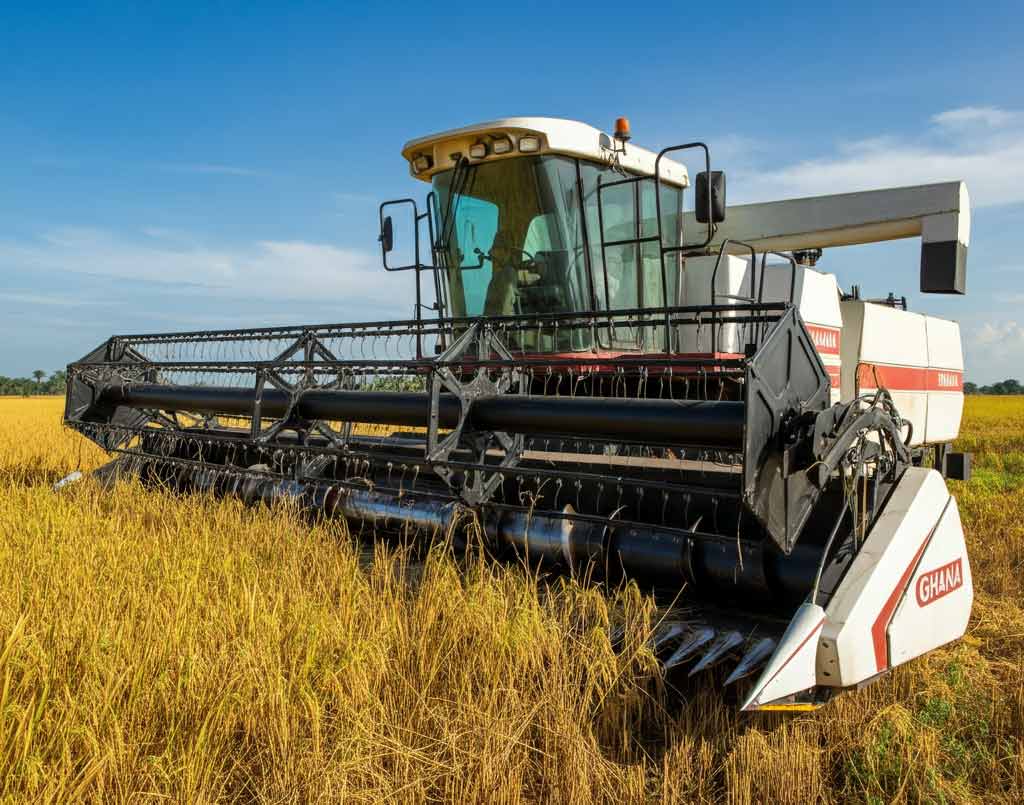
Rice is a staple food for millions in Ghana, forming a crucial part of the nation’s diet and agricultural economy. For generations, farmers have relied on manual labor to harvest this essential crop, a process that is often slow, strenuous, and inefficient. However, the adoption of modern rice harvesting machines is set to transform the industry, offering a pathway to greater productivity, reduced costs, and enhanced food security.
The Role of Rice Harvesting Machines in Improving Farm Operations
Traditional rice harvesting methods in Ghana present several significant obstacles for farmers. The process is incredibly labor-intensive, requiring a large workforce to cut, gather, thresh, and clean the grain. This dependency on manual labor leads to high costs, which can eat into a farmer’s profits. Furthermore, harvesting is a time-sensitive operation. Delays caused by labor shortages or adverse weather can result in substantial post-harvest losses, with ripe grains shattering or being damaged. The physical toll on workers is also immense, making it a difficult and often undesirable task.
How Mechanization Supports Everyday Rice Farming
Rice harvesting machines, such as combine harvesters, provide a comprehensive solution to these challenges. These powerful machines streamline the entire harvesting process by combining reaping, threshing, and cleaning into a single pass through the field.
One of the most significant benefits is the incredible increase in speed and efficiency. A single combine harvester can accomplish in a few hours what would take a team of workers several days to complete. This rapid harvesting capability allows farmers to bring in their crops at the optimal time, drastically reducing the risk of losses due to delays. By minimising grain shatter and spoilage, mechanisation ensures that more of the crop makes it from the field to the market.
Everyday Advantages for Farmers and Communities
The impact of mechanisation extends beyond the farm gate. By reducing the reliance on manual labour, farmers can significantly lower their operational costs. This frees up capital that can be reinvested into other areas of their farm, such as purchasing better seeds, fertilisers, or expanding their cultivation area. The increased productivity leads to higher yields, which translates to greater income for farmers and a more stable supply of rice for the country.
Modern rice harvesting machines, like the popular Kubota models, are designed for performance and reliability. They are built to handle diverse field conditions and can be operated with relative ease after proper training. This accessibility makes them a practical investment for both large-scale commercial farms and smaller farming cooperatives.
Adopting rice harvesting machines is a vital step towards modernizing Ghana’s agricultural sector. By embracing this technology, Ghanaian farmers can overcome long-standing harvesting challenges, improve their livelihoods, and contribute more effectively to the nation’s economic growth and food sovereignty. The move towards mechanization is not just about new equipment; it is about cultivating a more efficient, profitable, and sustainable future for rice farming in Ghana.
Tags: agriculture, farming, ghana, harvesters, harvesting, kubota, machinery